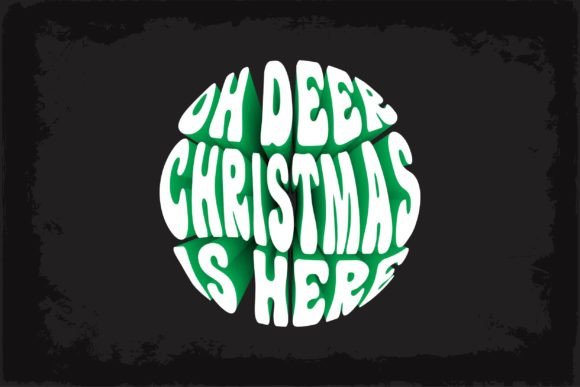
A Real Designer's Look at the Oh Dear Christmas is Here 3D Embroidery File
When a design file like Oh Dear Christmas is Here 3D lands in your inbox, the first question isn’t about the file formats. It’s whether this thing will stitch out beautifully and sell, or if it’s just another digital asset destined for the archive. As someone who stitches files for client projects and my own small shop merchandise, I look for designs that translate from screen to fabric with character and clarity. Let's talk about this one.
The Immediate Mood & Where It Belongs
The title tells you the theme, but the visual personality is what matters. Oh Dear Christmas is Here 3D has a playful, slightly whimsical feel. It’s not a formal, ornate holiday motif. That “Oh Dear” suggests a lighthearted, almost surprised celebration. This isn’t a design for a corporate holiday party polo shirt. It’s for the cozy, personal, and giftable items. Think of a custom embroidered sweatshirt for a friend who loves a casual Christmas, or a tea towel for a kitchen that decorates with humor. The 3D styling implies some depth and shadow, which in embroidery can be achieved through clever use of stitch layers and color, adding a nice tactile quality to the finished product.
It naturally belongs on relaxed apparel and home goods. I immediately pictured it on a chunky knit beanie, the center of a pillow cover for a family cabin, or as a standout feature on a canvas tote bag meant for carrying holiday market finds. For a baby’s first Christmas bodysuit, it could be sweet, scaled appropriately. The mood is friendly and inclusive, which boosts its giftability and appeal for handmade shops.
Real-Life Embroidery Scenario: The Holiday Tote Bag
Let’s walk through a real case. Imagine you’re preparing a batch of embroidered tote bags for a December craft fair. You want a design that stitches cleanly, catches the eye, and feels special enough that people choose it over a generic store bag. You load Oh Dear Christmas is Here 3D.
Your first practical thought is scale. A tote offers a large, flat surface, but you don’t want the design to be so large it becomes unwieldy or requires excessive stabilizer and time. Assessing the layout and detail level from the digital preview is key. Does it have tiny, intricate elements that might get lost or pucker on the bag’s often coarse fabric? The design’s density matters greatly here. A very dense fill stitch area on a tote could become stiff and less flexible. You’d hope for a balanced stitch density that allows the fabric to retain some drape.
Next, thread color contrast. On a natural canvas tote, a classic red and green palette would pop. On a dark heather gray sweatshirt, you might need to adjust colors for maximum clarity—perhaps a brighter white or cream for the “3D” shadow elements to maintain that depth. The design’s appeal hinges entirely on this stitching clarity after it’s punched out by the machine.
Where This Design Should Be Used With Care
No design is universally perfect. Here’s where a practical designer would proceed cautiously with Oh Dear Christmas is Here 3D.
Small Hoop Sizes & Tiny Details: If the design incorporates small lettering within the “Oh Dear” phrase or fine decorative accents, attempting to shrink it down for a baby hat or the curved surface of a cap could blur those details. Running stitch outlines might merge, and satin stitch letters could become bulky.
Textured or Stretchy Fabrics: That 3D effect, if achieved with layered stitching, might not sit as smoothly on a very textured fleece or a stretchy jersey knit without excellent stabilizer choice and possibly some design adaptation. It’s worth a test on scrap fabric first.
Products for Frequent Washing: On items like kitchen towels or aprons that see harsh laundering, a design with many small, dense stitch areas might wear faster or snag more easily than a simpler outline design. Consider the longevity of the finished product.
Dark Fabric Backgrounds: As mentioned, the apparent “3D” effect likely uses lighter shades for shadows. On a black garment, those shades need to be chosen wisely to preserve the illusion and prevent the design from looking flat.
How It Affects Your Business & Customer Trust
Using a design like this for your embroidery project isn’t just about making a thing. It’s about building trust. When a customer sees this embroidered on a sweatshirt in your Etsy listing, the quality of the stitch execution speaks directly to your professionalism. A clean, crisp stitch-out with good color contrast makes the product feel valuable and handmade with care, not hastily slapped on.
It enhances giftability. A holiday design that feels unique and well-executed is more likely to be chosen as a personalized gift. For a creative entrepreneur, this can mean repeat customers who appreciate your curation of designs. It also aids in brand consistency if your shop specializes in playful, high-quality holiday items.
Buyer engagement often starts with the visual preview. A strong, clear embroidery file creates a better printable mockup for your listings, making the digital product asset itself more attractive to other makers if you are selling the design. But the real engagement happens when someone touches the actual embroidered pillow cover and feels the texture of those stitches.
Practical Notes Before You Hoop Anything
Here’s my checklist before I’d commit Oh Dear Christmas is Here 3D to a real project:
- Test on Scrap: Always. Use a fabric similar to your final product. Check for puckering, stitch clarity, and how the “3D” elements translate.
- Check Color Contrast: Run mental or actual tests on both light and dark fabric backgrounds. Does the design hold its visual weight?
- Review Stitch Density: Look at the file in your software. Are there areas that look extremely dense? This affects machine time, thread use, and fabric feel.
- Confirm Hoop Size: Ensure the design dimensions fit comfortably within your standard hoop for the intended item, allowing for proper stabilization.
- Inspect Small Details: Zoom in. Are there any miniscule corners or details that might require perfect tension to come out clean?
- Stabilizer Strategy: Plan your stabilizer based on the fabric and the design’s apparent density. A cut-away might be needed for stretchy apparel.
- Licensing & Use: The product description mentions multiple file formats for graphics, which is great for flexibility. However, it does not explicitly state the license terms. Before selling finished items or commercial embroidery projects using this design, confirm the licensing. Is it for personal use only, or does it include commercial use for physical products? This is a critical step for protecting your craft business.
Oh Dear Christmas is Here 3D presents itself as a fun, thematic graphic. In the hands of an embroidery designer, its true value is determined not by the 300dpi file, but by how it performs under the needle and on the final product. With thoughtful testing and application, it could become a charming staple in your holiday embroidery lineup, adding that friendly, handmade touch to gifts and goods that customers genuinely appreciate.