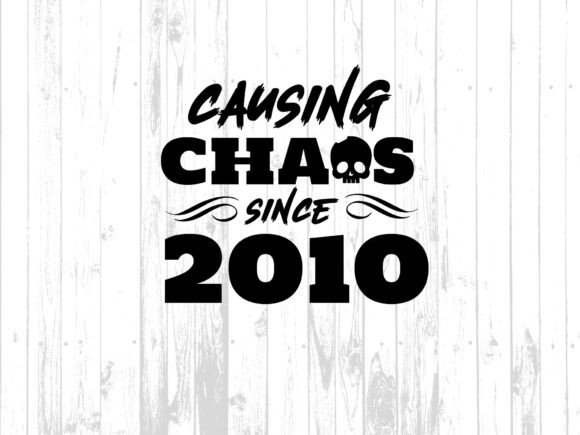
Causing Chaos Since 2009 Skull Embroidery Design Review
If you’re in the business of putting designs onto fabric, you know the moment you open a new embroidery file is a moment of judgment. You’re looking at it not just as art, but as a potential project—thread, needle, fabric, and customer all waiting. Today, that file is the Causing Chaos Since 2009 Skull T-Shirt design. Let’s walk through what it’s like to evaluate this playful graphic from the practical perspective of an embroidery professional.
The First Stitch Impression: Playful, Not Menacing
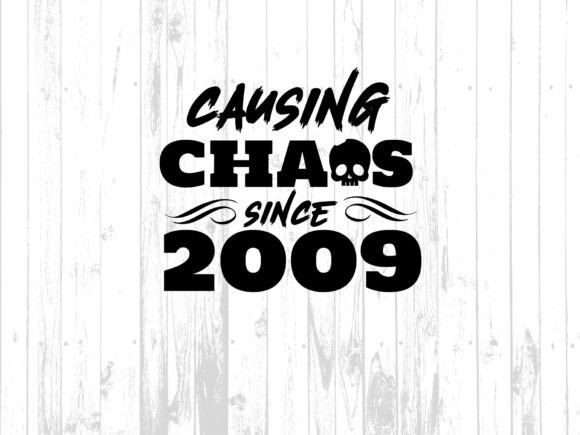
The immediate mood here is mischievous celebration. This isn’t a grim, serious skull; it’s a character. That “Causing Chaos Since 2009” tagline gives it a specific personality—it feels like a birth year badge of honor for someone with a sense of humor. The layout, with the graphic likely centered above or integrated with the text, suggests a straightforward, focal-point application. As an embroidery design, this personality translates well. It’s a graphic that tells a story, which is exactly what people look for in custom apparel and personalized gifts.
Where This Design Finds Its Home
I picture this design perfectly suited for a mid-weight cotton sweatshirt or a sturdy canvas tote bag. Imagine a client request: “I want something fun for my nephew’s 15th birthday—he’d love this.” You’d hoop that sweatshirt, knowing the stitch density needs to be balanced to not overwhelm the fabric, but still give that bold statement. It would be a standout holiday embroidery gift, or a great item for a small shop product line targeting a younger, playful audience.
It could also shine as an embroidered patch. The thematic element makes it a cool, ready-made patch for a backpack or jacket. For craft business owners on Etsy, this design could anchor a whole series of “chaos since” year products, creating nice brand consistency.
Scenarios Where It Might Need Extra Consideration
Not every project is a perfect fit. On very thin fabric like a fine t-shirt, the skull’s potential fill stitch areas could pose a challenge if too dense, requiring a lightweight stabilizer and perhaps a size adjustment. The playful details, especially in any small lettering or decorative accents around the skull, demand attention on curved surfaces like caps. You’d want to test a sample on a cap crown first to ensure the text remains legible and the details don’t get lost.
Dark fabric backgrounds are a classic choice for skull designs, but this one’s playful nature also opens it up for light fabrics. Think about thread color contrast. A bright, contrasting palette on a black sweatshirt would pop, but a more subdued, tonal scheme on a grey heather could give a sophisticated, boutique feel.
The Practical Impact on Your Work and Your Customer
Using this design affects more than just the stitch count. Its clear theme boosts customer engagement. It’s instantly recognizable and relatable for anyone born in 2009 (or who just likes the vibe). That increases the perceived value of your handmade product. When a gift feels personally tailored, like an embroidered pillow cover for a teen’s room, the giftability skyrockets.
Stitching clarity is paramount. The success of this design hinges on the details of the skull graphic and the crispness of the text. A muddy, dense stitch in the skull’s features would lose that playful charm. In your embroidery project testing, you’re looking for clean outlines—likely a mix of satin stitch for text and borders and running stitch or fill for the graphic itself—that preserve the design’s character.
Essential Designer Notes Before You Hoop
- Always test on scrap fabric first. Use the same material you plan for the final project. This tells you about puckering, density, and how the colors look in real thread.
- Check the design file in both black and white printable mockups to understand its form without color influence.
- Review the design for any extremely small details that might vanish on textured fabrics like a blanket or a towel.
- Confirm the necessary hoop size. A design with this presence likely needs a decent field to maintain detail.
- Use the proper stabilizer for your chosen fabric. A tote bag needs something firm; a sweatshirt might need a cut-away.
- Consider the end-use. For baby embroidery on a bib or soft item, ensure the stitch area isn’t too rough or bulky.
- Most importantly, if you intend to sell the finished product or use it for commercial embroidery, verify the licensing terms of this digital embroidery file. Know your rights before you sell.
Final Thoughts on Chaos as a Product
The Causing Chaos Since 2009 Skull T-Shirt design, as a piece of machine embroidery artwork, offers a solid foundation for creative projects. It’s more than a graphic; it’s a theme. Its strength is in its specific, celebratory mischief. For Etsy sellers, apparel decorators, and creative entrepreneurs, it provides a ready-made concept that can be applied across products—from aprons in a niche kitchen line to patches for a skate shop.
Your job as the maker is to translate that digital concept into a tangible, well-crafted item. By paying attention to fabric choice, stitch execution, and end-user context, you can turn this illustration into a high-quality embroidery design that truly resonates. It’s a design that promises a bit of fun, and with careful execution, your embroidered version will deliver that promise perfectly.